A school annual day is one of the hardest events to run well, and it rarely gets the credit. Over a couple of hours, dozens of dance and music items follow one another, each with its own track, every child has to hear their cue and their music on stage, the chief guest and the principal need to be heard clearly, there is usually a prize distribution that works like a small awards ceremony, and a hall full of proud parents is recording every second on their phones. A convocation is calmer but no less exacting, with a long procession of names that must each be pronounced and heard. Both leave no room for a track that will not play or a microphone that cuts out.
This guide is written for the teacher, event coordinator or administrator who has been handed the annual day, the convocation or the sports day, and has to make the AV reliable across a long, cue-heavy programme. The principles hold every year and across the winter event season, so keep it as a reference.
Because clear speech and reliable cues sit at the heart of it, our guides to sound system wattage and common AV mistakes are useful companions, and the projector versus LED wall guide helps with the screen choice for your hall or ground.
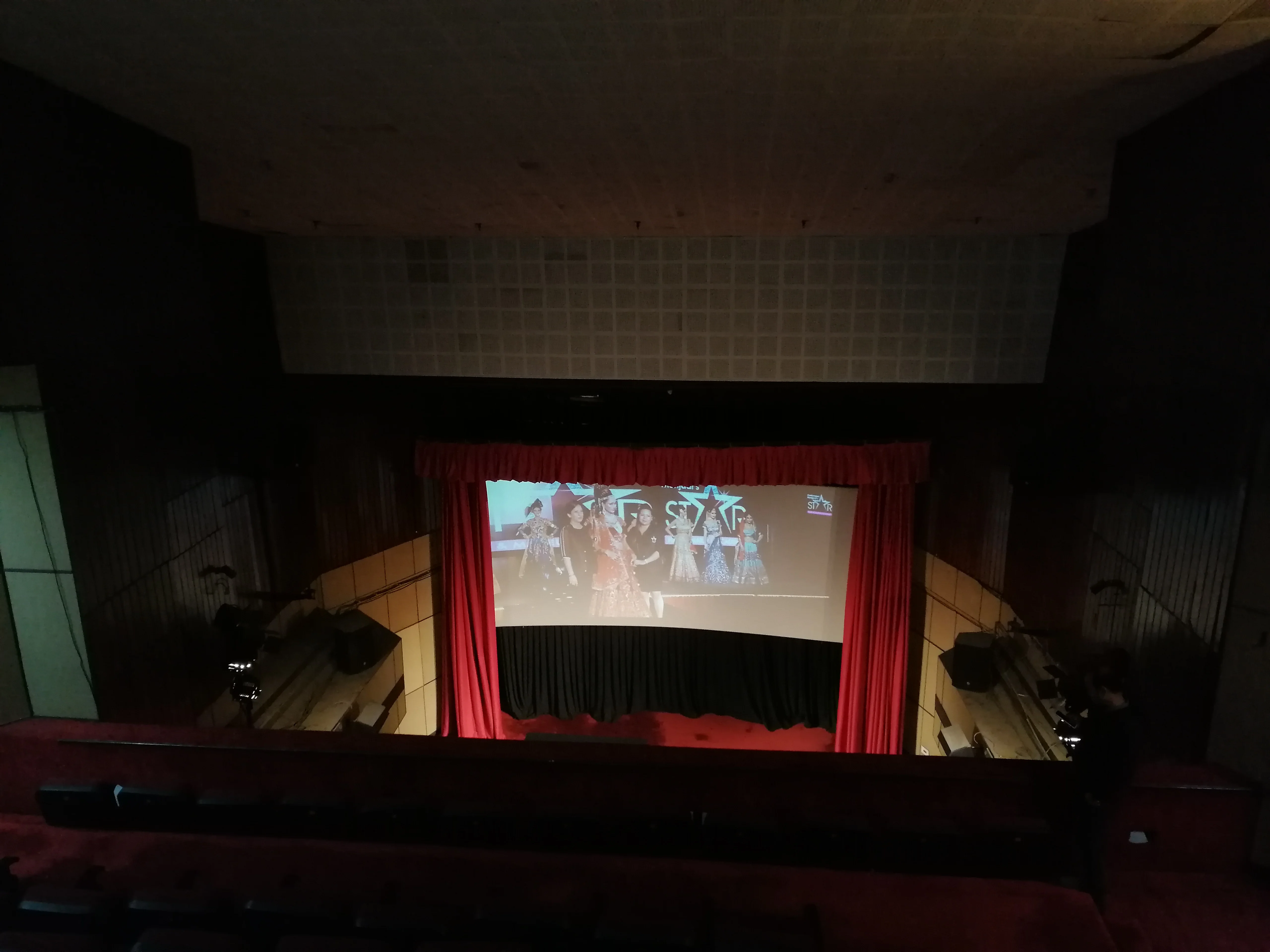
The Heart of It: Reliable Track Playback and Cues
The single thing that makes or breaks an annual day is the music. A programme of many performances means many tracks, played in a precise order, each starting on cue as the children take their positions. The reliable way to do this is a prepared, ordered playlist run from a dedicated playback setup by an operator working to a cue sheet, not someone hunting for a file on a phone between items. Every track collected in advance, labelled, ordered and tested in the rehearsal removes the most common annual-day disaster, the item that starts and the music that does not.
Just as important, the performers on stage need to hear their music clearly, which means monitor speakers facing the stage (foldback), not just the speakers facing the audience. Children cannot perform to music they cannot hear over their own movement and the crowd. A digital mixer ties the playback, the monitors and the microphones together. Our sound system on rent in Delhi NCR page lists the kit for this.
Speeches and the Name-by-Name Moments
Alongside the performances, the chief guest, principal and anchors need clear, intelligible speech, and the prize distribution or, at a convocation, the reading of names is a sequence where every word has to land. That calls for good wireless microphones, handheld and lapel, enough of them for the anchors and dignitaries, and levels tuned so speech is clear over the hall without feedback. In a large auditorium or on an open ground, the same intelligibility logic applies as at any speech event: the back rows must hear as clearly as the front, which on a big ground means a distributed system with delayed speakers.
Stage, LED and Lighting
The stage carries the performances and the felicitations, and an LED backdrop behind it shows the school branding, the event theme, item titles, house colours and the names during prize giving. In a lit hall or in daylight on a ground, an LED screen reads far better than projection. A projector suits an auditorium only when the room can be darkened and no direct light falls on the screen. For a deep auditorium or a large ground, a side screen with a live camera feed brings the performances closer for parents at the back.
Performance lighting lifts the items: stage washes so the performers read well for the audience and the cameras, a follow spot for solos and the chief guest, and colour to support the theme, all run from a console to a cue list that follows the programme. For a convocation the lighting is more formal and even. Our stage rental and setup and event production equipment rental pages cover the stage, LED and lighting together.
Recording and Streaming for Parents
Parents want to see their child perform, and not every parent can attend, so recording and streaming have become a standard ask. A multi-camera recording produces a keepsake of the whole programme, and a live stream lets grandparents and travelling parents watch in real time. Doing it well means cameras positioned for the stage, an encoder or switcher, and reliable connectivity at the venue, the same chain as any live stream. The same camera feed can also drive the side screen for the back rows. We plan the streaming alongside the in-hall AV so the two do not compete.
Auditorium or Open Ground
Where you hold it shapes the setup. A school auditorium has controlled light and power and an existing layout, so the work is tuning sound for the room and adding stage, LED and performance lighting. An open ground, common for sports days and larger annual functions, is an outdoor build: daylight-rated LED rather than projection, a distributed sound system for the larger area, and cable safety with children moving around. Confirm power points and capacity with the school or venue electrician well before the day. A convocation is usually an auditorium or a covered venue and leans formal. Each is workable with the right plan, and a rehearsal in the actual space is what turns a plan into a smooth show.
How School-Event AV Is Quoted
School-event AV is quoted as a package for your venue and programme. The price depends on the venue size and layout, the audience, how many speakers and microphones the programme needs, the stage and LED size, the lighting design, and whether you want recording or a live stream. Sound, stage, lighting, recording and streaming are quoted on request once we know the venue and the running order; LED walls are priced by size and pixel pitch.
If the auditorium can be darkened and a projector is enough for item titles and slides, projector packages start from Starts from ₹2,000/day for an XGA projector with a 6x4 screen, delivery and setup. Larger screens and brighter projectors are quoted for the hall. Prices exclude GST. Share your venue and programme for an indicative quote, and see our AV rental price list for standard equipment rates.
Typical Setups by Venue
These are typical starting plans, adjusted for each venue and programme.
- Annual day in a school auditorium. An ordered playlist run by an operator on a cue sheet, stage monitors so the children hear their music, wireless mics for the anchors and chief guest, an LED backdrop for item titles and house colours, and performance lighting with a follow spot for solos, all checked in a rehearsal.
- Convocation in a covered hall. Clear, intelligible speech for the reading of names, reliable wireless microphones with even coverage across the hall, formal stage lighting, an LED screen for names and branding, and a recording for the archive.
- Sports day on an open ground. A distributed sound system with delayed speakers so announcements and march-past music carry across the field, a daylight-rated LED screen for results, wireless mics for announcers, and cabling matted where children move. Power is arranged with the school or venue.
- Annual day with a live stream. A multi-camera setup feeding a side screen for the back rows and a live stream to a private link for families at home, planned alongside playback, monitors, mics, LED and lighting. Streaming is quoted for your venue and connectivity.
Common Mistakes to Avoid
- Playing tracks off a phone on the night. The classic annual-day failure is the item that starts and the music that does not. Collect every track in advance, label and order them, run them from a dedicated playback by an operator on a cue sheet, and test them in the rehearsal.
- No stage monitors for the performers. Children cannot perform to music they cannot hear over their movement and the crowd. Provide foldback monitors facing the stage, not only speakers facing the audience.
- Underestimating speech clarity for names and speeches. Prize giving and convocation name-reading need every word to land. Plan enough good wireless mics and tune for intelligibility, with a distributed system on a large ground.
- Skipping the rehearsal in the actual space. A run-through in the real venue with the real cues is where timing and technical gaps surface while they are still fixable, not during the show in front of parents.
- Treating streaming as an afterthought. Parents increasingly expect to watch. Plan cameras, an encoder and reliable connectivity alongside the in-hall AV rather than bolting a phone on at the last minute.
Frequently Asked Questions
How do you make sure every dance track plays on cue?
By collecting every track in advance, labelling and ordering them into a single prepared playlist, and running them from a dedicated playback setup by an operator working to a cue sheet, not from a phone on the night. Each track is tested in the rehearsal in the correct order. This removes the most common annual-day failure, the item that begins and the music that does not, and keeps the long programme flowing item to item.
Why do performers need separate monitor speakers?
Because the speakers facing the audience do not let the children on stage hear their own music clearly over their movement and the crowd, and they cannot perform to music they cannot hear. Monitor speakers, or foldback, face the stage and give the performers a clear reference. For any annual day with dance and music items, stage monitors are not optional; they are what keeps the performances in time.
Can you stream the annual day live for parents who cannot attend?
Yes, and it is an increasingly common request. We set up cameras positioned for the stage, an encoder or switcher, and reliable connectivity at the venue, then stream to a private link or your platform so families at home and travelling parents can watch in real time. The same camera feed can drive a side screen for the back rows. We plan the streaming alongside the in-hall AV so neither compromises the other.
Do we need an LED screen, or is a projector enough?
In a lit auditorium or in daylight on a ground, an LED screen reads far better than a projector, which washes out under light. The screen shows the school branding, the theme, item titles, house colours and names during prize giving, and a side screen with a live feed helps a deep hall or large ground. A projector works only where the auditorium can be darkened and no direct light falls on the screen; adding lumens does not fix daylight. We recommend the right option for your venue and its lighting.
Our function is on the school ground, not in a hall. Does that change things?
Yes. An open ground is an outdoor build: a daylight-rated LED screen rather than projection, a distributed sound system with delayed speakers for even coverage across the field, and cable safety with children moving around. Power points and capacity are confirmed with the school or venue electrician. Announcements and music have to carry clearly to the far side of the ground. Coverage for a ground is planned differently from an auditorium.
How important is a rehearsal, and will you support it?
It is essential for a cue-heavy event, and yes, we support it. A run-through in the actual venue with the real tracks, microphones and lighting cues is where timing and technical gaps surface while they are still fixable. We plan setup time around your rehearsal, confirmed in the quotation, so the playback order, mic handovers and lighting cues can be tested before the audience arrives. Schools that build in rehearsal time have the smoothest shows.
How early should we book?
As soon as your date and venue are fixed. Many schools and colleges hold annual days, convocations and sports days in the winter months, so sharing the requirement early leaves time to plan the equipment, crew and a rehearsal in the space. Availability is confirmed in the quotation for your date.
Can you handle a very large number of performers and items?
Yes. A long programme of many items is exactly what the ordered-playlist-and-cue-sheet approach is built for, with an operator running playback, monitors and microphones to the running order. We coordinate with your teachers on the item sequence and the track list in advance, so backstage and the AV desk are working from the same plan. The scale of the programme is manageable when the cues are prepared and rehearsed.